A crucial issue in the beauty and vegan/health world is the production of palm oil. It has been appearing on grocery store shelves everywhere immersed in products such as cookies, crackers, processed foods, cosmetics and even baby shampoos. What is being ignored, however, are the true consequences of palm oil production as it is harvested far from home.
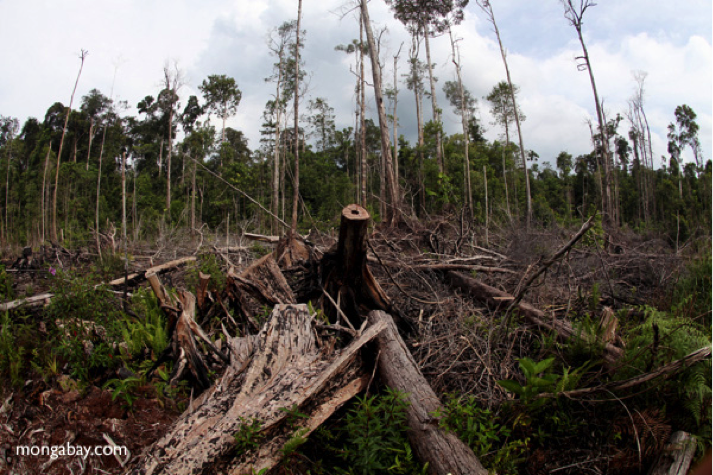
What are the consequences? To start, massive deforestation is occurring in places such as Malaysia, Indonesia, and Southeast Asia, in addition to its’ ongoing expansion in sub-Saharan Africa. This leads to the destruction of animal habitats and the impending extinction of endangered species. The harvest of palm oil also affects the air we breathe, as the loss of carbon storage in peat forests and clearing fires influence regional air quality. The image below illustrates the destruction of forests in Indonesia.
More and more people and brands are becoming aware of the issue and are taking a stand. For example, Pura Botanica, an all-natural beauty and skincare line incorporates sustainably produced palm oil for use in its’ products. Sustainable palm oil is an approach that aims to produce palm oil without causing deforestation or harming the environment as a whole. The RSPO (Roundtable on Sustainable Palm Oil) was founded in 2004, and many feel that this widely accepted certification scheme has the potential to prevent deforestation in the industry. It is currently the largest sustainability-focused organization within the palm oil sector. Though this is a step in the right direction, it is not a solution. The RSPO’s standards do not ban deforestation or destruction of peat lands for the development of palm oil plantations.
What can we do? The first step towards sustainability and regulation is mandatory labeling of products. If brands are forced to label palm oil then it places them in a position to source CSPO (Certified Sustainable Palm Oil) or remove palm oil from their products. If a brand is not using CSPO then consumers need to place pressure on these brands to change to certified oil, which is why brands such as Pura Botanica are also working towards raising awareness of sustainable palm oil production.
In addition to supporting the Roundtable on Sustainable Palm Oil (RSPO) the Rainforest Alliance has come up with a unique and strict certification system for palm oil production based on the Sustainable Agricultural Network (SAN) standard. One company working towards the sustainable production of palm oil is Cargill, which “owns and operates 22 palm oil refineries in Malaysia, India, China, the United States, and the European Union that purchase, refine, and market palm oil products from [their] own and other plantations,” according to their website. In addition to Cargill, Unilever is a global company apart of the RSPO’s effort to ban unsustainable pail plantations.

As you can see, the production of palm oil affects the life of our ecosystem, as it is leading to the destruction of the environments where it is produced. The only way to prevent this from happening is to join in the efforts and to say no to the unsustainable production of palm oil.